I built LearnChess because I got stuck.
Hi, I'm Niko — a software engineer, a lifelong teacher, and a chess player who plateaued at 1600 and couldn't break through. This is the story of how that frustration turned into an app.
A teacher who codes
I studied business informatics and built my first app back in 2012 — and I've been hooked on building software ever since. But the part I always loved most wasn't the code. It was explaining it: making a hard idea finally click for someone else.
That thread runs through my whole career. I taught iOS and software engineering at an education startup in San Francisco. Then I joined a small Berlin developer-tools company called Prisma as employee #3, where I spent almost nine years teaching developers about databases — writing, speaking at conferences, running product launches, and eventually leading developer relations as a Staff Developer Advocate.
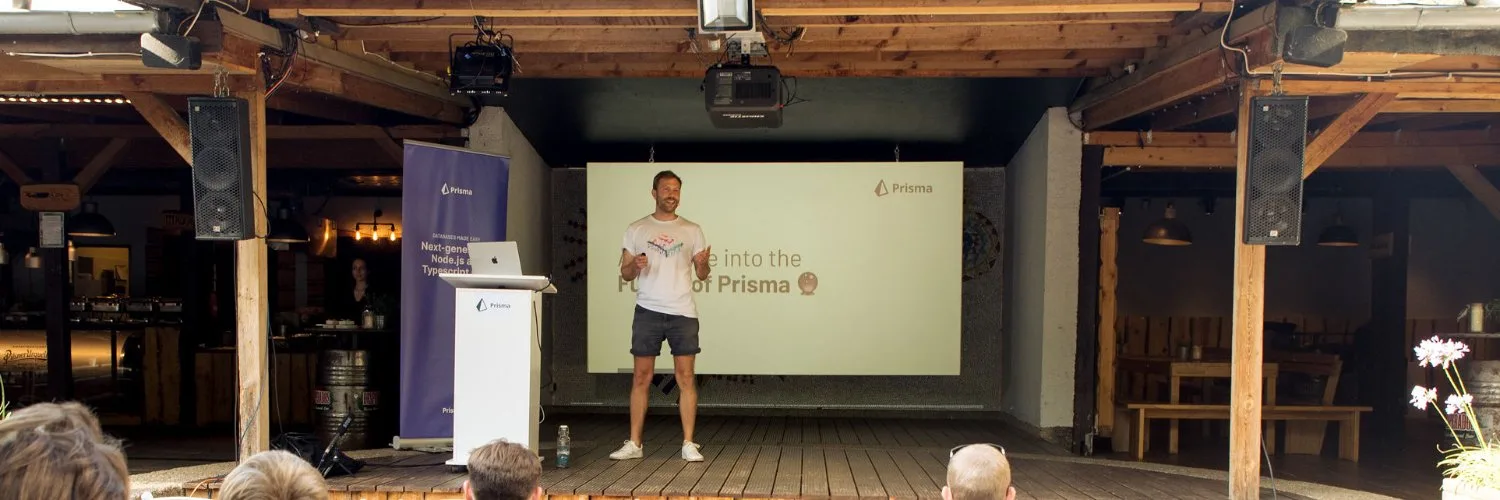
“I've always loved learning — and helping other people learn.”
The short version
- 2012First app
Shipped my first app — hooked on building ever since.
- ~2014Instructor in SF
Taught iOS & software engineering at an education startup.
- 2016–25Prisma
Employee #3. Taught developers for ~9 years; left as Staff Developer Advocate.
- Oct 2025Went all in
Left Prisma to build the chess app I always wanted.
- NowLearnChess
Teacher, builder, and stuck improver — finally pointed at chess.
The other thread: a player who hit a wall
My grandfather taught me how the pieces move when I was a kid. For years that's all chess was to me — an occasional game with friends over the board, nothing serious.
Then 2020 happened. Stuck at home like everyone else, I started playing online on Lichess and chess.com, and I was instantly obsessed. In my first year I shot up from around 1100 to 1600.
And then I stopped improving.
Four years stuck at 1600
My real Lichess Blitz rating. The climb was easy. The plateau was not.
I did everything you're supposed to do. I analyzed my games. I downloaded app after app. I even paid $3.99 a month for a tactics trainer and drilled puzzles every day. My rating didn't budge.
The problem wasn't effort. It was that none of these apps ever helped me understand why I kept making the same mistakes. I was memorizing and grinding — not actually learning.
“I did everything the apps told me. I still plateaued.”
So I built the app I wished existed
In October 2025 I left Prisma to find out what I'd build if I started from scratch. The answer came almost immediately: the chess app I'd been wishing for the entire time I was stuck.
Every app I'd tried was missing something — a key feature, or just a great experience. None of them connected the dots between learning an idea, drilling it, and understanding your own mistakes. They kept everything in separate silos.
I happened to have the exact combination to fix that: years of building software, years of teaching hard things simply, and the lived experience of being precisely the frustrated, plateaued player I was building for.
LearnChess is the result. It's built on one belief — that you improve when you understand chess, not when you memorize it.
Built to help you understand, not just play
Interactive lessons, unlimited puzzles, and a plain-English AI coach — one connected loop that turns practice into real understanding.
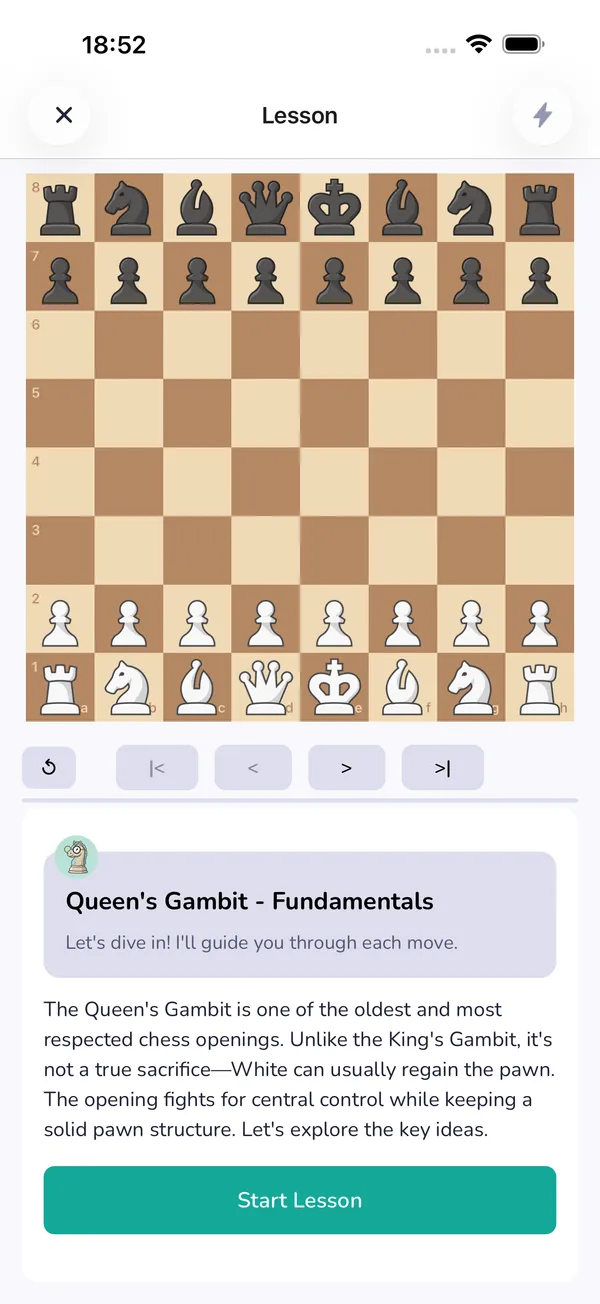
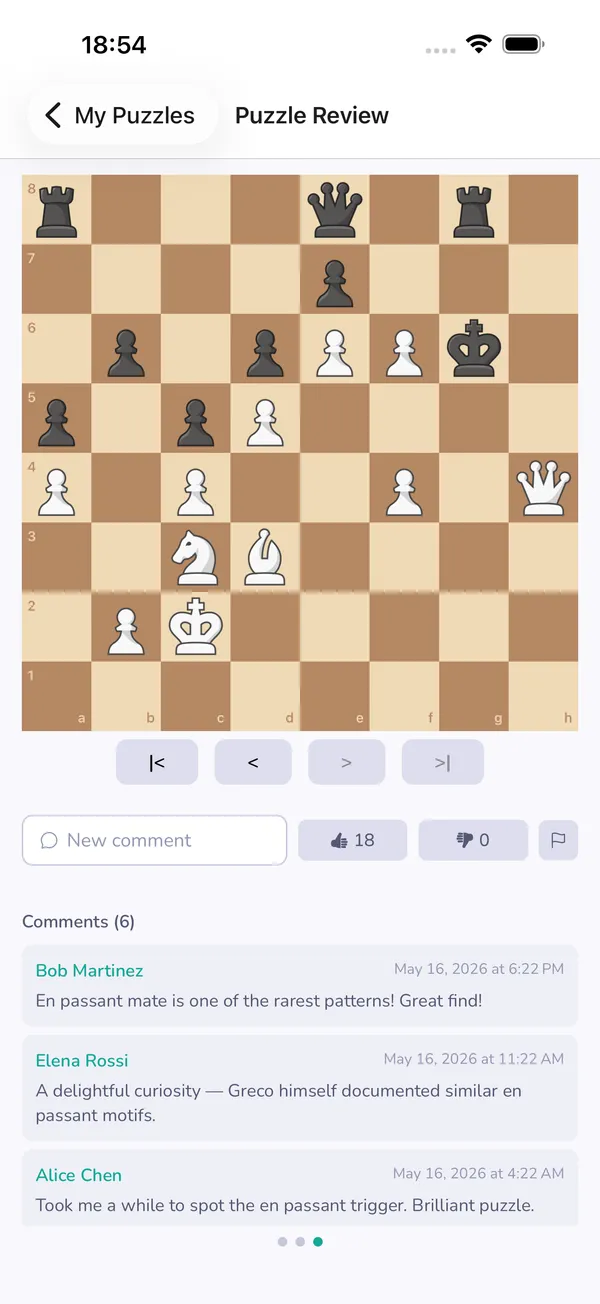
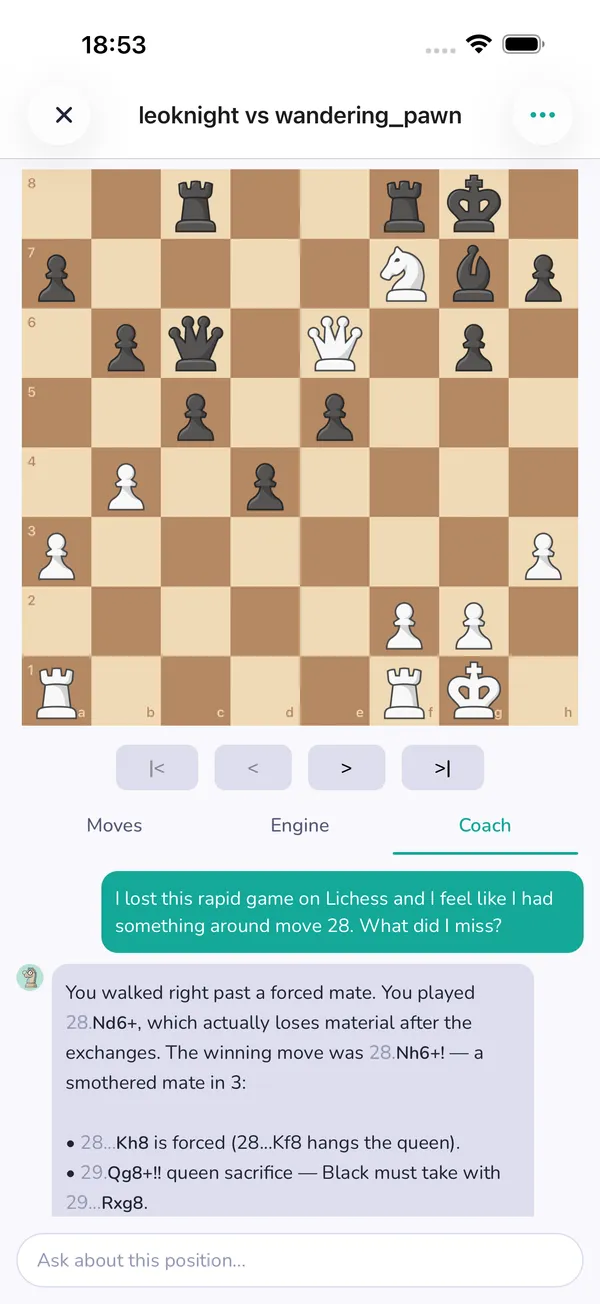
If you're stuck where I was, I built this for you.
I'd genuinely love for you to try it — and to tell me what you think.
— Nikolas Burk